















Empresa
30 September 2026
 17:32
17:32 A weak hinge can make a good door feel cheap. It may sag, squeak, rub, or fail early. For door makers and hardware buyers, this creates complaints and project risk. The solution starts with knowing every hinge part and choosing the right hinge for the door system.
The main parts of a door hinge are the hinge leaf, knuckle, hinge pin, screw hole, and sometimes bearings, tips, washers, or springs. These hinge parts work together so the door can pivot, open and close smoothly, and stay aligned with the door frame.
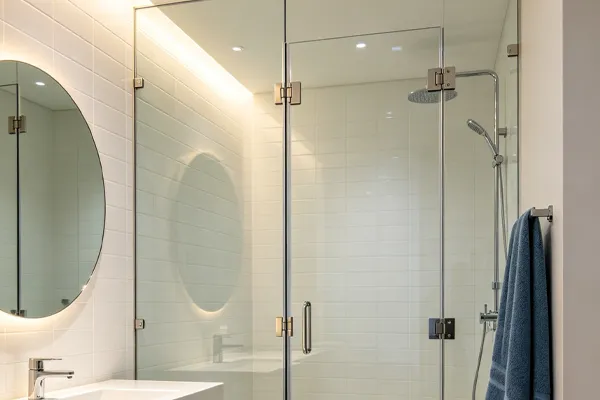
¿Cuáles son las partes de una bisagra de puerta? Explicación de las partes de las bisagras, los componentes de las bisagras y los tipos de bisagras
A standard bisagra de puerta has several basic parts: two leaves, a knuckle, a hinge pin, and screw holes. These hinge parts form a simple but strong joint. One hinge leaf fixes to the door. The other hinge leaf fixes to the door frame. The knuckle wraps around the central pin, allowing the rotation of the door.
The hinge may look small, but it carries the weight of the door every day. A poor hinge can make a door hard to open and close. A strong hinge gives better durability, smooth movement, and long service life. That is why door hinge parts matter in residential, commercial, and architectural projects.
In our manufacturing work, we often remind door and window manufacturers that a hinge is not just a small accessory. It is a moving load-bearing component. The hinge structure must match the door material, frame design, use frequency, surface finish, and project environment.
The hinge leaf is the flat plate part of the hinge. Most common hinges have two leaves. One leaf is attached to the part of the door. The other leaf is attached to the door frame. The leaves of a hinge spread the load and keep the door aligned.
A hinge leaf usually has screw holes. These holes allow screws to fasten the hinge to the door and frame. If the screw hole position is not accurate, the door may not sit correctly. If the hinge leaf is too thin, the hinge may bend under load. If it is too weak, a heavy door may sag.
For aluminum door systems, sliding window systems, shower systems, and modern architectural hardware solutions, leaf size and thickness must match the profile design. This is where OEM / ODM production becomes important. A standard hinge may not fit every door and frame combination.
The knuckle is the rounded barrel part of the hinge. It is formed when the two hinge leaves curl around the hinge pin. The knuckle of the hinge is where movement happens. It creates the hinge joint and helps the door to pivot.
A basic hinge may have several knuckles that interlock. The central pin passes through the knuckle. When the door opens, the knuckles rotate around the pin. If the knuckle of a hinge is poorly formed, the hinge may feel rough, loose, or noisy.
The knuckle must be smooth, accurate, and strong. In high-quality production, knuckle shaping, pin fitting, and surface treatment must be controlled carefully. This is especially important for stainless steel hardware, bathroom hardware, shower systems, and architectural hardware used in humid or high-traffic spaces.
The hinge pin is the rod that passes through the knuckles. It holds the two leaves together and becomes the axis for door movement. Without the hinge pin, the hinge cannot work as a joint.
A removable hinge pin can make installation and maintenance easier. A fixed or security pin can improve safety in some door applications. Some hinges also use bearings around the pin area to reduce friction. Ball-bearing hinges are common for doors that open and close many times per day.
For project contractors, the hinge pin is a small detail with a big effect. If the pin is too soft, it may wear quickly. If the pin fit is too loose, the door may shake. If the finish is poor, a squeaky door may appear after short use.
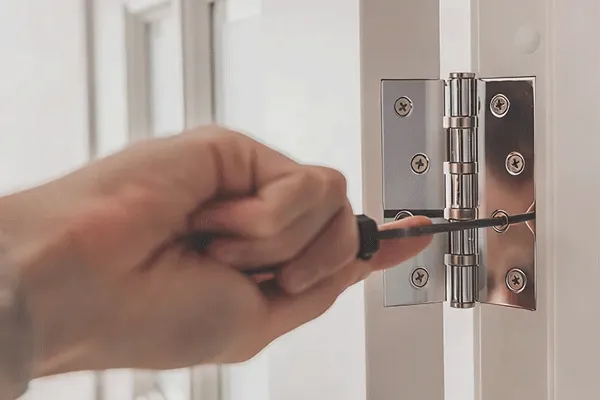
¿Cuáles son las partes de una bisagra de puerta? Explicación de las partes de las bisagras, los componentes de las bisagras y los tipos de bisagras
A screw hole may look simple, but it affects installation accuracy. The screw hole position controls how the hinge sits on the door and frame. If the holes are misaligned, the hinge may pull the door out of position.
For door and window manufacturers, screw hole tolerance is very important. A small difference can affect production speed. Workers may need to re-drill holes, adjust the door, or replace parts. This wastes time and increases cost.
In OEM hardware manufacturing, we can customize hole spacing, countersink shape, leaf size, thickness, finish, and packing according to the customer’s system. This helps aluminum system suppliers and project contractors install hinges faster and more consistently.
The anatomy of a door hinge includes the hinge leaf, knuckle, hinge pin, screw holes, bearing area, finish, and sometimes decorative tips or springs. But the anatomy of a door is wider. It includes the door panel, frame, handle, lock, seal, closer, and other hardware.
A hinge must work with all of these parts. If the hinge is too weak, the door may sag. If the handle and lock are misaligned, the door may not close the door properly. If the frame is not straight, even a good hinge may perform poorly.
For B2B projects, the hinge should be selected as part of the whole door hardware system. Door handles, locks, rollers, hinges, stainless steel hardware, and bathroom hardware should match the function of the door. This is why system compatibility matters so much for door and window manufacturers.
| Hinge Part | Función | Buyer Concern |
|---|---|---|
| Hinge leaf | Connects hinge to door and frame | Thickness, size, hole position |
| Knuckle | Allows rotation around the pin | Smooth movement, accuracy |
| Hinge pin | Holds leaves together | Strength, wear resistance |
| Screw hole | Supports installation | Hole spacing and countersink |
| Rodamiento | Reduces friction | Smooth operation, longer life |
| terminar | Protects and decorates hinge | Corrosion resistance, color match |
| primavera | Helps self-closing movement | Closing force and safety |
There are many different types of door hinges, and each hinge type has a different use. The most common type of hinge is the butt hinge. It is used on many interior and exterior doors. It has two leaves joined by a pin and knuckle.
Other different types of hinges include pivot hinge, continuous hinge, spring hinges, concealed hinges, offset hinge, strap hinge, flag hinges, wide throw hinges, and piano hinges. These various types of hinges are designed for different door sizes, opening angles, weights, and design needs.
A variety of door hinges gives designers and manufacturers more freedom. A decorative door may use visible hinges with a special finish. A modern aluminum door may use concealed hinges. A heavy door may need ball-bearing hinges or a stronger stainless steel hinge.
A butt hinge is the common basic hinge used on many doors. It is compact, practical, and easy to install. A pivot hinge allows the door to pivot from a point near the top and bottom rather than from the side edge. This creates a clean modern look and supports certain heavy or wide doors.
A continuous hinge runs along most or all of the door height. It spreads weight more evenly than short hinges. This can help with heavy doors, high-use doors, cabinets, and some commercial applications. Piano hinges are a type of long continuous hinge.
Gate hinges are designed for gates, outdoor doors, and larger openings. A strap hinge has a long leaf that spreads load across the gate or panel. Gate hinges often need stronger corrosion resistance because they may face rain, dust, sun, and outdoor temperature changes.
| Tipo de bisagra | Best Use | Key Benefit |
|---|---|---|
| Butt hinge | Interior and exterior doors | Simple and reliable |
| Pivot hinge | Modern doors, heavy doors | Clean look and strong support |
| Continuous hinge | Commercial doors, cabinets | Spreads load evenly |
| Spring hinges | Self-closing doors | Helps close automatically |
| Concealed hinges | Modern hidden hardware | Clean appearance |
| Strap hinge | Gates and rustic doors | Strong visual and load support |
| Ball-bearing hinges | High-use doors | Smooth movement and durability |
| Flag hinges | Some aluminum and PVC systems | Easy adjustment in system doors |
To choose the right hinge, start with the weight of the door. A heavy door needs a stronger hinge, thicker leaf, better pin, and sometimes bearings. The number of hinges also matters. A tall or heavy door may need three or more hinges for better support.
Next, check the function of the door. Is it an interior door, exterior door, shower door, aluminum system door, gate, cabinet, or commercial entrance? Does it need to open wide? Does it need self-closing movement? Will it face humidity, salt air, or heavy traffic?
For aluminum door systems, the hinge must fit the profile. The body of the hinge, screw hole position, leaf size, and finish should match the system design. For bathroom hardware and shower systems, stainless steel or corrosion-resistant materials are often preferred.
The right hinge improves safety, operation, and customer satisfaction. The wrong hinge creates service calls.
OEM/ODM hardware buyers should choose a hinge manufacturer with stable production quality, strong tooling ability, surface treatment control, system understanding, and long-term supply capacity. Price is important, but quality consistency is more important for door and window projects.
We are professional manufacturing plants for sliding door hardware, window hardware, stainless steel hardware, bathroom hardware, rollers, handles, locks, hinges, and architectural hardware products. We specialize in OEM / ODM production for aluminum door systems, sliding window systems, shower systems, and modern architectural hardware solutions.
Our target customers include door and window manufacturers, building hardware distributors, project contractors, wholesalers, aluminum system suppliers, bathroom hardware brands, and architectural engineering companies. These customers need stable product quality, reliable OEM supply capacity, smooth system compatibility, customized hardware solutions, and long-term cooperation.
A good hardware supplier should support:
An aluminum system supplier needed a hinge for a new residential door series. The standard hinge did not match the profile groove. The screw holes were not in the right position, and the opening movement felt too tight.
We reviewed the door profile, adjusted the hinge components, changed the leaf size, improved the hole position, and selected a stronger finish. After sample testing, the hinge opened smoothly and matched the door and frame better.
The result was simple but valuable: faster assembly, fewer installation problems, and a better final door experience for the customer.

¿Cuáles son las partes de una bisagra de puerta? Explicación de las partes de las bisagras, los componentes de las bisagras y los tipos de bisagras
Material and finish affect hinge durability. Stainless steel is often used for bathroom hardware, exterior doors, coastal projects, and modern architectural hardware because it resists rust better than many common materials. Zinc alloy, brass, aluminum, and steel can also be used depending on the hinge design and project budget.
A hinge finish is not only decorative. It protects the hinge from moisture, fingerprints, scratches, and corrosion. Common finishes include satin stainless steel, polished stainless steel, black, nickel, chrome, bronze, and custom colors.
For distributors and wholesalers, finish consistency is important. If one batch looks different from the next, customers may complain. For project contractors, finish matching matters because hinges must look good with manijas de las puertas, locks, frames, and other hardware.
A squeaky door often comes from friction, dirt, poor pin fit, weak finish, or lack of lubrication. Sometimes the hinge is not the real problem. The door may be misaligned, or the frame may be twisted.
To reduce early failure, choose the correct hinge first. Then install it correctly. Use the right screws. Keep the door aligned. Do not overload a light hinge on a heavy door. For high-use commercial doors, use ball-bearing hinges or stronger hinge designs.
Basic maintenance steps include:
A hinge is small, but it works every time someone uses the door. Good quality saves service cost.
The main parts of a hinge are the hinge leaf, knuckle, hinge pin, and screw holes. Some hinges also include bearings, washers, springs, decorative tips, or security pins.
The knuckle is the round barrel section where the hinge leaves curl around the pin. The hinge pin passes through the knuckle and allows the door to rotate.
The hinge leaf is the flat plate that attaches to the door and frame. Most door hinges have two leaves, one for the door and one for the frame.
A heavy door often needs ball-bearing hinges, pivot hinges, continuous hinges, or heavy-duty butt hinges. The right choice depends on door weight, height, frame type, and opening frequency.
Butt hinges are used for many standard doors. They are common in homes, offices, commercial buildings, cabinets, and general door systems.
Concealed hinges are better when the design needs a hidden and modern look. Normal visible hinges may be better when strength, simple installation, or easy replacement is more important.
A hinge may squeak because of friction, dirt, poor alignment, lack of lubrication, or worn hinge parts. Cleaning, tightening screws, and lubricating the hinge may help.
Choose hinges based on the aluminum profile, door weight, opening direction, screw hole position, finish, corrosion resistance, and system compatibility. Custom OEM hinges are often best for aluminum door systems.
Responderemos en un plazo de 24 horas. Para solicitudes urgentes, contáctenos por WhatsApp/WeChat al +86 137 9191 8989 o llame directamente al mismo número.
*Respetamos la confidencialidad de sus datos y protegemos toda la información.
Solo utilizaremos su información para responder a su consulta y nunca enviaremos correos electrónicos ni mensajes promocionales no solicitados.