













Empresa
16 October 2026
 13:49
13:49 A loose, stuck, or broken tub handle can make a bathroom feel old and hard to use. If the handle will not turn, leaks, or feels weak, the problem can grow fast. This guide helps you understand the issue and fix it safely.
To fix a bathroom tub handle, first turn off the water, remove the handle screw or cap, pull off the old handle, check the stem or cartridge, measure the replacement size, and install a matching new faucet handle. If the valve body is damaged or hidden behind tile, call a professional plumber.
What Problem Does a Bathroom Tub Handle Usually Have?
Can You Fix a Bathtub Faucet Handle Yourself?
What Tools Do You Need Before You Start?
How Do You Turn the Water Off Safely?
Step-by-Step Guide: How to Remove the Old Handle
How to Replace a Bathtub Faucet Handle Correctly
What If the Faucet Handle Is Stuck or Hard to Pull?
When Should You Replace the Whole Bathtub Faucet?
DIY vs Professional Repair: Which Option Is Better?
Product Quality: What B2B Buyers Should Learn from Bathroom Handle Problems
A bathroom tub handle can fail in several simple ways. It may become loose, hard to turn, cracked, or fully broken. Sometimes the handle spins but does not control the water. Other times, the bathtub faucet still leaks after you close it.
The problem is often caused by an old screw, worn plastic parts, a damaged adapter, mineral buildup, or a bad cartridge behind the handle. In many homes, the handle looks like the problem, but the real issue may sit deeper inside the faucet body.
For buyers, distributors, and Herrajes para baños brands, this is important. A small handle failure can affect the full user experience. Good bathroom hardware should feel solid, fit accurately, and hold up under daily use.
Yes, many people can fix or replace a bathtub faucet handle with basic DIY skill. If the problem is only a loose screw, cracked handle, or worn adapter, the job is usually easy. A handy homeowner can often finish it with a screwdriver and replacement part.
However, not every repair is simple. If the stem is damaged, the valve is leaking inside the wall, or the tile must be cut for access, the job becomes more serious. In that case, it is safer to call a local plumber.
A good rule is simple: handle-only repair is DIY-friendly; valve-body repair may need a professional. This guide helps you learn the difference before you purchase the wrong part from a hardware store or big box store.
Before you fix the handle, gather the right tool and parts. This saves time and helps you avoid breaking small components. Many old bathtub handles use hidden screws, caps, or adapters, so work slowly.
| Tool / Item | Why You Need It |
|---|---|
| Screwdriver | To remove handle screws |
| Allen key | For set screws on some handle styles |
| Utility knife | To cut old caulk around trim if needed |
| Adjustable wrench | To loosen some fittings carefully |
| Needle-nose pliers | To pull small clips or adapters |
| Flashlight | To see inside the handle area |
| Replacement handle | To replace the old part |
| Towel | To protect the bath surface |
| Measuring tape | To measure stem length and handle size |
| Mild cleaner | To clean old mineral deposit |
Do not force parts too quickly. A quick pull may break old plastic parts or damage the valve stem. A slow approach is better.
Before you start, turn the water off if the repair may open the valve area. Some handle-only replacement jobs do not release water, but it is still safer to know where the shutoff is.
For many houses, the bathroom may not have a single local shutoff for the bathtub. You may need to close the main water supply. After you turn the water off, open the tub faucet to release pressure.
This simple preparation makes the repair easier and cleaner.
First, look for the screw. Some handles have a visible center screw. Others hide the screw under a small decorative cap. A single lever shower or bath handle may use a set screw on the side or underside.
Use a small screwdriver or knife edge to lift the cap gently. Then remove the screw. If the screw is old or rusty, press firmly but do not strip it. Once the screw is out, pull the handle straight away from the wall.
If the handle does not move, do not twist too hard. The stem behind it may break. That can turn an easy repair into a bigger job.
To replace the handle, the new part must match the old stem or adapter. This is where many DIY repairs go wrong. Buyers may choose a handle that looks good, but the inner fitting does not match.
Measure the stem shape, screw location, handle depth, and trim style. If you are not sure, take the old handle to a hardware store. For B2B buyers, this same idea applies at a larger level: accurate dimensions reduce returns, complaints, and installation problems.
Replacement Matching Table
| Check Point | What to Look For |
|---|---|
| Stem shape | Round, square, splined, or brand-specific |
| Screw type | Center screw or side set screw |
| Handle depth | Must sit close without rubbing tile |
| terminar | Chrome, brushed nickel, black, stainless style |
| Función | Hot, cold, diverter, or single control |
| Trim fit | Must match escutcheon and wall opening |
| Materiales | Metal handle is stronger than cheap plastic |
Once the replacement fits, slide it onto the stem, tighten the screw, and test the turn. The handle should move smoothly without wobbling.
An old faucet handle can stick because of mineral buildup, corrosion, or dried soap deposit. This is common in bathrooms with hard water. Do not hit the handle with heavy force. You may damage the tile, wall, or valve.
Try cleaning around the base first. A mild cleaner and warm water can help loosen dirt. If needed, use a handle puller tool made for faucet repair. This tool pulls the handle forward evenly without bending the stem.
If the handle is still stuck, stop and check the risk. When the valve is old, strong pulling can break the stem inside the wall. For a hotel, apartment, or commercial project, that can cause downtime and higher repair cost.
You should replace the whole bathtub faucet if the handle problem comes from a worn valve, damaged cartridge, repeated leaks, or a broken stem. A new handle will not solve a deeper valve problem.
If water keeps dripping after the handle is closed, the cartridge or valve seat may be worn. If the handle turns freely but water does not change, the internal connection may be stripped. If the wall area is already open during renovation, replacing the full faucet may be the better long-term option.
Repair or Replace?
| Situación | Best Action |
|---|---|
| Loose handle screw | Tighten or replace screw |
| Cracked handle only | Replace handle |
| Worn plastic adapter | Replace adapter |
| Stuck old handle | Remove carefully or use puller |
| Dripping water | Check cartridge or valve |
| Broken stem | Call plumber or replace valve part |
| Renovating bathroom | Consider full faucet replacement |
For bathroom product buyers, this shows why component quality matters. A durable handle, strong adapter, and accurate fitting can reduce future repair needs.
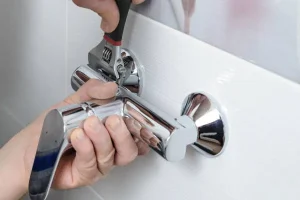
DIY repair is better when the issue is visible, simple, and handle-related. If you can access the screw, remove the old handle, and match the replacement, the repair is usually easy.
Professional repair is better when the problem is behind the wall, near plumbing connections, or linked to water leakage. A plumber can test pressure, inspect the valve, and prevent hidden water damage.
Many people watch a YouTube video before starting. That can help, but every faucet style is different. Use video instruction as a guide, not as a guarantee. If your bathtub faucet does not match the video, slow down and inspect the product carefully.
For importers, distributors, bathroom hardware buyers, and project contractors, a tub handle is not just a small part. It affects daily comfort, brand reputation, and after-sales cost.
A low-quality handle may look fine in a catalog but fail after repeated use. It may loosen, discolor, crack, or break during installation. This creates complaints for wholesalers, system suppliers, and project buyers.
As a China-based architectural hardware manufacturer, we provide Herrajes para puertas, window hardware, bathroom hardware, Herrajes de acero inoxidable, and stainless steel railing systems with OEM/ODM customization and factory-direct production. For global B2B buyers, product reliability starts with material selection, accurate mold design, surface finish control, and stable batch production.
Bathroom Hardware Quality Checklist for Buyers
| Quality Point | Por qué es importante |
|---|---|
| Material strength | Reduces breakage during daily use |
| Accurate fitting | Makes installation faster |
| Stable surface finish | Keeps the bathroom looking clean |
| Screw quality | Prevents loose handles |
| Smooth operation | Improves user experience |
| Soporte OEM/ODM | Helps brands build unique product lines |
| Embalaje | Reduces shipping damage |
| Batch consistency | Helps distributors avoid mixed quality |
For hardware brands and building material suppliers, small details create long-term trust.
When choosing a replacement, do not look at style only. The handle must fit the valve and match the bathroom design. A beautiful handle that does not fit is not useful.
For residential use, a metal handle often feels more solid than plastic. For commercial or hotel use, durability matters even more. The handle should resist frequent use, cleaning chemicals, moisture, and surface wear.
Good replacement options should offer:
For B2B buyers, custom branding, finish options, packaging design, and mixed product sets can also add value.
After you fix or replace the handle, use it correctly. Do not force it past the stop point. If the handle becomes hard to turn, check the cartridge or valve instead of pushing harder.
Keep the faucet area clean and dry. Water spots and soap deposit can build up around the handle base. Regular cleaning helps the handle move smoothly and keeps the bathroom looking better.
For hotels, apartments, and commercial buildings, regular maintenance checks can prevent small problems from becoming major repair jobs.
Simple Maintenance Tips
Factory-direct bathroom hardware can help B2B buyers control cost, quality, and customization. Instead of buying random replacement parts from many sources, distributors and project contractors can build a stable supply chain.
A professional factory can support custom finishes, private label packaging, product matching, and batch consistency. This is useful for bathroom hardware buyers, building material suppliers, system fabricators, and architectural hardware brands.
For large projects, factory communication also matters. Buyers may need drawings, samples, surface finish confirmation, packing standards, and delivery planning. A small handle can be part of a much larger bathroom hardware system.
Can I fix a bathtub handle without turning off the water?
For simple handle replacement, you may not always need to turn off the water. But for safety, you should turn the water off if you are removing parts near the valve or if you are unsure. This helps prevent leaks and pressure problems.
Why does my faucet handle spin but not turn on the water?
The handle may be stripped, the adapter may be worn, or the valve stem may be damaged. Remove the handle and check the inner connection. If the stem is broken, you may need professional repair.
How do I know which replacement handle to buy?
Remove the old handle and check the stem shape, screw type, handle depth, and trim style. Take photos and measurements before you purchase a replacement.
Can I replace only the handle and keep the old faucet?
Yes, if the valve and stem are still working well. If the bathtub faucet leaks or the stem is damaged, replacing only the handle may not solve the problem.
What if the handle is stuck and will not pull off?
Clean around the base, remove all screws, and try gentle pulling. If it still does not move, use a handle puller tool. Do not force it too hard, or you may break the valve stem.
Is a metal faucet handle better than a plastic one?
In many cases, yes. Metal handles often feel stronger and last longer. Plastic handles can be lower cost, but they may crack or wear faster under frequent use.
A bathroom tub handle can often be fixed with basic DIY steps.
Always check the screw, cap, stem, and adapter before buying a replacement.
Turn the water off if the repair may expose the valve or cause leakage.
Do not force an old stuck handle; use the right tool if needed.
Replace the whole bathtub faucet if the valve, cartridge, or stem is damaged.
A good faucet handle should fit accurately, turn smoothly, and resist daily wear.
For B2B buyers, bathroom hardware quality affects installation speed, after-sales cost, and customer satisfaction.
Factory-direct OEM/ODM bathroom hardware supply helps global distributors, brands, contractors, and project buyers control quality and cost.
Responderemos en un plazo de 24 horas. Para solicitudes urgentes, contáctenos por WhatsApp/WeChat al +86 137 9191 8989 o llame directamente al mismo número.
*Respetamos la confidencialidad de sus datos y protegemos toda la información.
Solo utilizaremos su información para responder a su consulta y nunca enviaremos correos electrónicos ni mensajes promocionales no solicitados.