














Empresa
26 September 2026
 10:04
10:04 Allen Wang | CEO and Founder, HIPAD
Updated: September 25, 2026
A sliding door lock manufacturer should be evaluated by the complete door interface, not by a catalog finish alone. For OEM selection, compare door thickness, hook or latch engagement, keep geometry, handle and cylinder interfaces, material evidence and sample controls.
| Selection point | Option to compare | Evidence to request |
|---|---|---|
| Espesor de la puerta | Sliding-door locks for 30-60 mm doors | Profile drawing and finished-door sample |
| Engagement | Hook, latch or related lock configuration | Travel, keeper capture and release test |
| Materiales | Steel/zinc-alloy or brass/steel family options | Model-specific material and finish declaration |
| Handle interface | Spindle, centers and cylinder connection | Complete handle-lock drawing |
| Keep geometry | Frame profile, offset and fixing support | Installed engagement sample |
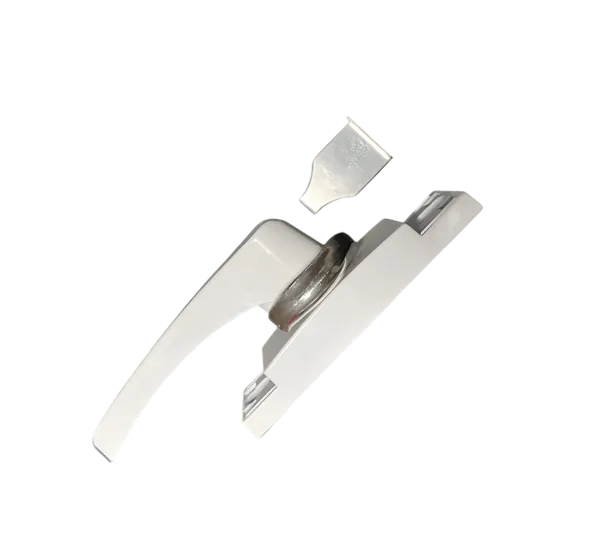
HIPAD’s supplied product reference identifies Aluminum Sliding Door Locks with mortise, sliding-door, crescent, multi-point and cylinder-lock configurations. It lists sliding-door locks for 30-60 mm doors where applicable. The exact lock model still requires project-specific confirmation.
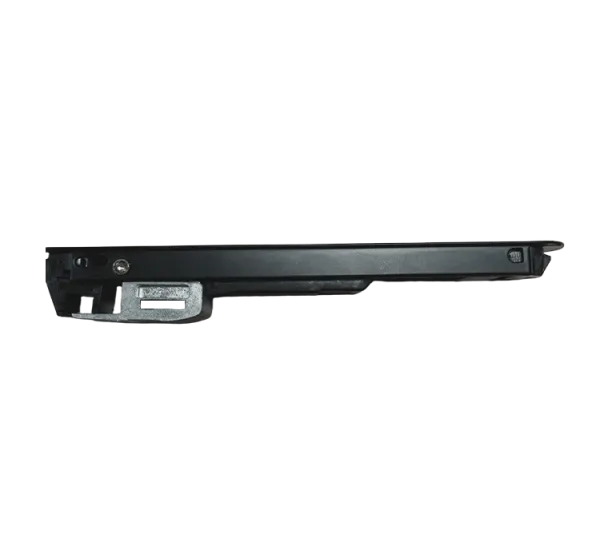
Ask the manufacturer to show how the selected hook or latch enters the keep, how much travel is available and how the door remains aligned while locking. A hook may suit a different frame interface from a latch, so the door profile and keep should be reviewed together.
Compared with generic replacement listings, an OEM program must control the lock body, handle, cylinder, keep and machining schedule. A matching faceplate does not prove that the internal connection or frame engagement is correct.
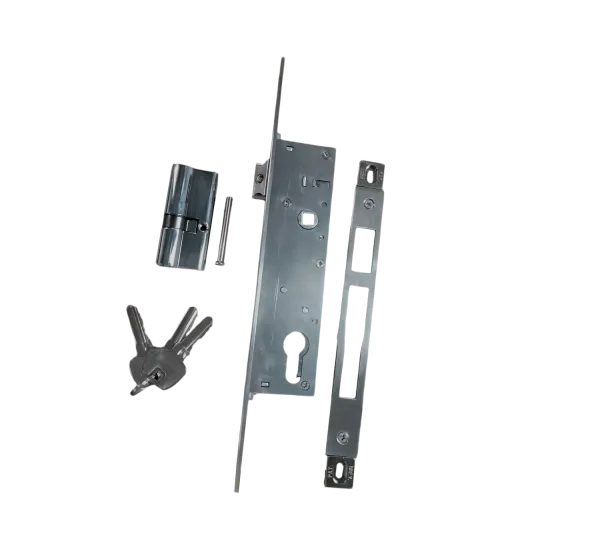
Record backset, handle centers, spindle section, cylinder position, handing and opening direction. State whether the lock is used on an aluminum sliding door, a framed system or another profile. The handle must operate the selected lock without excess play or interference.
A polished faceplate can hide a poor profile match, insufficient keep engagement or an incompatible spindle. Inspect the concealed interface and operate the complete door. Edge cases include cladding that changes finished thickness and frames where the keep is supported by a thin wall.
EN 12209, Building hardware – Locks and latches, is a relevant external reference for lock-related educational content. It does not replace model-specific approval or prove that an individual lock meets a project requirement. The supplied HIPAD product material does not disclose a universal certificate number, security grade, price or MOQ for every sliding-door lock.
Request the exact material, finish, cycle or security evidence where required, plus tooling, MOQ, price, lead time, packaging and inspection terms.
The supplied reference lists sliding-door locks for 30-60 mm doors where applicable. Confirm the exact model and finished profile.
Use a dimensioned keep drawing and a complete door sample. Check travel, capture, release, alignment and operating force.
No. Spindle, centers, cylinder, handing and lock-body interfaces must be matched in the same hardware schedule.
HIPAD describes OEM/ODM support for dimensions, structures, finishes, logos, molds and packaging. Feasibility requires a project quotation.
Send the door and frame profiles, finished thickness, lock type, backset, handle and cylinder interface, keep geometry, handing, finish, quantity, packaging and tests. Review the aluminum sliding door locks range, el lock systems range, el window lock OEM guide, el multipoint lock specification guide y contact HIPAD for model-specific confirmation.
Allen Wang is CEO and Founder of HIPAD. He began as a technical engineer in 1998 and focuses on manufacturing, tooling, quality, OEM/ODM development and architectural hardware supply.
Responderemos en un plazo de 24 horas. Para solicitudes urgentes, contáctenos por WhatsApp/WeChat al +86 137 9191 8989 o llame directamente al mismo número.
*Respetamos la confidencialidad de sus datos y protegemos toda la información.
Solo utilizaremos su información para responder a su consulta y nunca enviaremos correos electrónicos ni mensajes promocionales no solicitados.
