













Empresa
20 September 2026
 18:28
18:28 Un rodamiento deficiente puede hacer que una buena puerta sea ruidosa, inestable o difícil de mover. Para los compradores, el perjuicio va más allá de una pieza defectuosa: aumentan los reclamos, se retrasan los proyectos y suben los costos de reposición. La solución es evaluar al fabricante, la compatibilidad del sistema, el proceso de pruebas y la capacidad de suministro antes de realizar un pedido al por mayor.
To choose a sliding door roller manufacturer, confirm five things: proven product quality, correct system fit, clear load and material data, real custom manufacturing capability, and stable bulk production. Ask for drawings, samples, test records, quality-control steps, tooling ownership, and delivery plans. The best supplier does not simply sell a wheel; it helps you select or develop a complete roller solution for your door.
The moving part may look small, but it carries a large share of the operating risk. The wheel, axle, bushing, bracket, fasteners, track contact, and adjustment mechanism work as one integrated unit. If one item is poorly matched, the moving panel may tilt, rub the frame, jump on the track, or become hard to move. This is especially important with large glass panels and doors used many times each day.
A professional factory studies the full sliding door system rather than offering the nearest catalog item. We ask where the unit sits, how it connects to the bottom of the door, what track profile it runs on, and how installers adjust the height. For patio doors, wardrobes, partitions, and busy commercial entrances, the operating conditions can be very different.
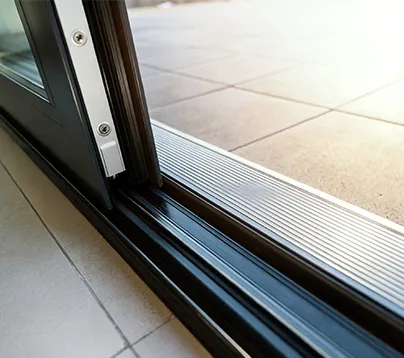
Across modern sliding systems, the correct part must fit the complete structure. For sliding door systems, every dimension must work with the frame, track, fixing points, and operating space.
Rollers are designed as working components, so this system view also protects your brand. Well-designed roller systems reduce avoidable variation during installation. Door manufacturers and distributors need fewer complaints, fewer returns, and consistent repeat orders. A reliable partner should help you prevent problems before production, not explain them after shipment.
Start with the door itself. Record the panel weight, frame material, track dimensions, installation space, opening frequency, operating environment, and target working life. The right sliding door hardware for a light wardrobe is not the same as the hardware used on large glass sliding doors or an industrial sliding entrance.
Next, define how the weight is shared. A two-wheel design does not always mean each wheel can safely carry half of the total door weight. Track joints, uneven installation, impact, and user force can create extra load.
Ask for the rated load capacity of the complete unit, not only the wheel material. For heavier doors, you may need a reinforced steel housing, a larger wheel diameter, or more than one load-bearing point.
Installation details matter too. Check:
An adjustable roller can help installers level the panel, but the adjustment screw and bracket must remain stable under use. The appropriate roller is the one that fits, carries, adjusts, and moves correctly as a complete part. The roller type must also suit the track material.
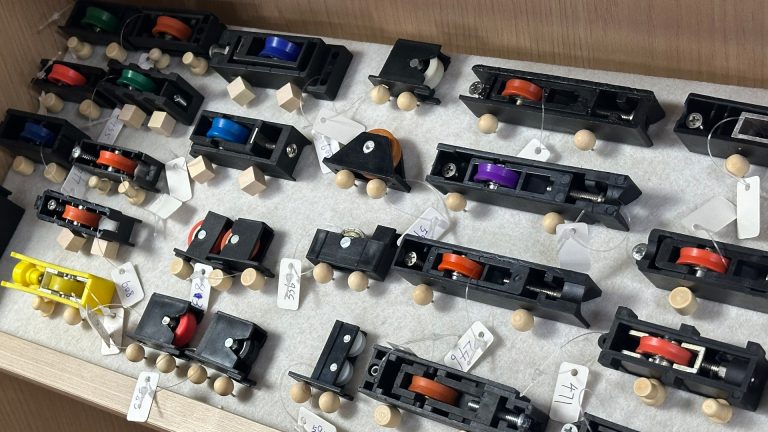
A broad catalog is useful because it gives buyers more ways to match local profiles and project requirements. It should include standard sliding models, embedded units, single-wheel and double-wheel options, hanging designs, sliding window rollers, replacement rollers, and reinforced versions.
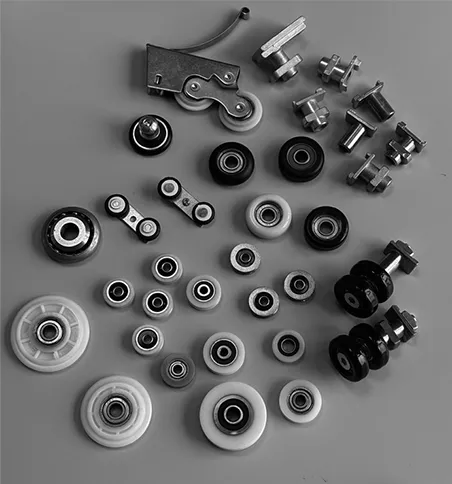
It may also include steel wheel options, polymer wheels, POM wheels, PU-coated wheels, and different axle structures.
Do not judge the catalog only by the number of product photos. Ask whether the manufacturer can provide:
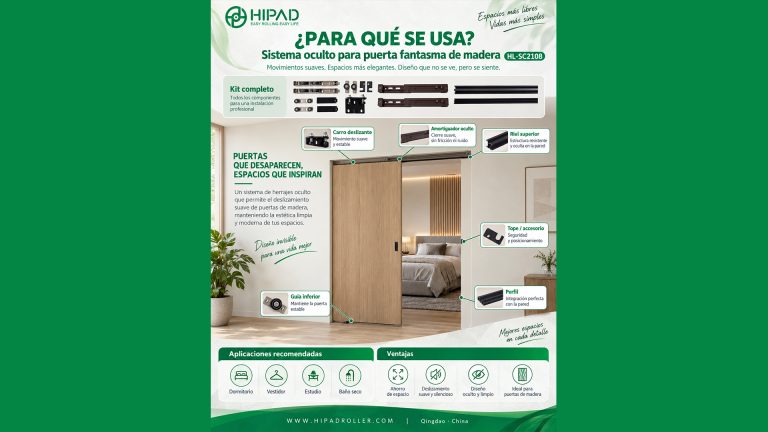
HIPAD’s current product range covers door and window applications with several wheel materials, bracket materials, adjustment types, and custom structures. The manufacturer also supports drawing- and sample-based development for system matching. See the HIPAD roller range.
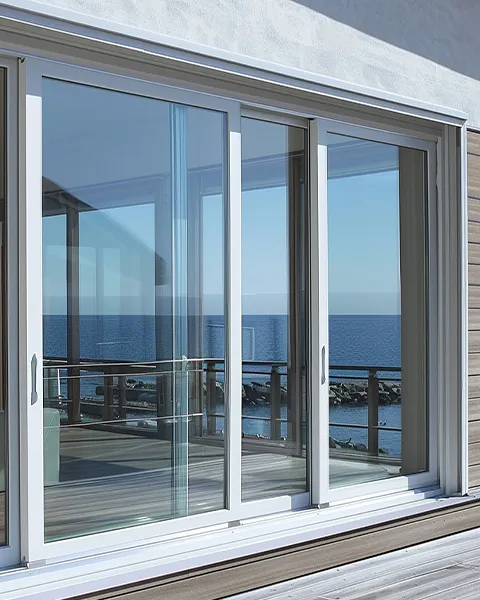
A strong catalog should support more than one market:
| Solicitud | Typical Requirement | Useful Product Direction |
|---|---|---|
| Aluminum sliding door | Compact housing and profile fit | Embedded or adjustable unit |
| Sliding glass door | Higher load and stable movement | Reinforced bracket with precision bearing |
| Sliding patio doors | Weather resistance and easy maintenance | Sealed wheel structure and protected finish |
| Puertas correderas interiores | Quiet movement and clean appearance | Quiet polymer or POM wheel |
| Commercial spaces | Repeated opening and closing | Durable multi-wheel or reinforced design |
| Window systems | Small installation space | Compact adjustable window wheel |
| Frameless glass partition | Controlled movement and visual quality | Purpose-built glass system hardware |
| Steel sliding door | Impact resistance and high load | Reinforced housing and steel wheel option |
Wheel material changes noise, wear, rolling feel, and track contact. Polyamide is common where quiet movement and low weight matter. Reinforced polymers can improve strength, while metal wheels may suit demanding tracks and higher loads.
Material choice should reflect the track, environment, and expected use—not simply the unit price.
| Material de la rueda | Main Advantages | Possible Limitations | Typical Applications |
|---|---|---|---|
| Polyamide | Quiet, lightweight, and track-friendly | May not suit extreme loads | Windows and interior doors |
| POM | Stable dimensions and smooth movement | Material quality varies | Aluminum door and window systems |
| PU-Coated Wheel | Low noise and impact absorption | Coating must be well bonded | Premium residential systems |
| Steel Wheel | High strength and wear resistance | Can create more track noise | Industrial and high-load applications |
| Stainless Steel Wheel | High strength and better moisture resistance | Higher cost | Outdoor and coastal applications |
The rotating core affects friction and stability. A quality ball bearing can support smooth operation when the fit, sealing, lubrication, and load are correct.
Deep-groove units are widely used because they can carry radial loads and some axial load in both directions. SKF also notes their low-friction and low-maintenance characteristics. Read the SKF deep-groove ball bearing overview.
Size is equally important. The correct wheel diameter must match the track geometry and available housing space. A larger roller diameter can cross small track joints more easily, but it also needs more room inside the bracket.
The final choice should balance:
Ask the manufacturer for a clear test plan. Depending on the product, this may include:
For building hardware, BS EN 1527 provides requirements and test methods for sliding and folding door hardware. It is a useful reference when buyers and factories discuss performance expectations.
Do not accept a vague claim such as “strong enough.” Ask:
A heavy-duty claim should be tied to a defined structure and test method. Products for high-frequency use need stronger verification than hardware for a lightly used home or office door.
For coastal, bathroom, and outdoor projects, surface protection is essential. Ask about the base metal, plating thickness, stainless steel grade, coating process, and salt spray method.
ISO 9227 specifies neutral, acetic acid, and copper-accelerated salt spray procedures used to assess the resistance of metallic materials and protective coatings. Test hours alone do not tell the whole story, so the acceptance standard and allowed surface condition must also be clear.
Good custom development starts with information. Send the factory as much technical data as possible, including:
A photo is rarely enough. The factory may estimate the scale incorrectly or miss a hidden fixing point, internal support, or adjustment feature.
The engineering team should confirm compatibility before opening tooling. It should review the wheel path, bracket envelope, fixing method, tolerance, adjustment access, and contact between the wheel and track.
This is how a custom sliding roller becomes a dependable component instead of a copied shape.
HIPAD describes its manufacturing model as factory-direct production with in-house tooling, mold development, engineering support, private molds, branding, and customized packaging. Review HIPAD’s custom manufacturing capabilities.
A capable factory should offer more than one route for custom sliding door solutions:
This flexibility is important for wholesalers, bathroom hardware brands, aluminum system suppliers, and contractors that serve different markets.
Factory photos are helpful, but process evidence is better. Ask where tooling, injection molding, stamping, machining, finishing, assembly, and inspection take place.
Some work may be subcontracted. That is not automatically a problem. The important question is whether the manufacturer controls:
Request a simple process flow. It might look like this:
Drawing review → Sample confirmation → Material approval → Tooling → First article inspection → Pilot run → Mass production → Final inspection → Packaging → Shipment
At each stage, ask who approves the result and what record is kept. This gives you a practical picture of traceability.
Capacity must also match your order pattern. A factory that can produce one good sample may still struggle with mixed-SKU purchase orders.
Discuss monthly output, available tooling, mold maintenance, assembly staffing, quality checkpoints, spare capacity, and peak-season planning. Customers worldwide need repeatability, not a one-time demonstration.
A good manufacturing partnership becomes easier over time. The factory stores approved drawings, control samples, material requirements, packing details, and inspection points.
When you reorder, the team should know:
Communication should also be practical. You need clear answers about technical changes, forecast quantities, raw materials, tooling maintenance, production status, and shipment planning.
When rollers may be affected by a track update, the factory should identify the risk early. When you want to upgrade your sliding doors, it should suggest a controlled change rather than replacing parts without validation.
As a professional manufacturing group for sliding door hardware, window hardware, stainless steel hardware, bathroom hardware, handles, locks, hinges, and architectural hardware, we work with system fit in mind.
Our goal is to support wholesalers, aluminum system suppliers, bathroom hardware brands, contractors, door manufacturers, and engineering companies with stable private-label and ODM production—not just one shipment.
A distributor may receive repeated complaints that a replacement wheel fits the housing but runs poorly on the local track. The first sample looks close, yet the door becomes noisy after installation.
The real issue may be the groove profile, axle position, wheel hardness, or contact angle rather than the outside dimensions.
In a typical development process, we compare the original sample with the track section, measure the loaded contact point, and review the panel weight. We then select the right roller structure, adjust the bracket or wheel profile, and test the revised sample in the customer’s system.
This method turns a generic look-alike into a validated solution.
The business result is broader than one corrected part. The distributor gains:
The same method can support sliding glass door rollers, window wheels, shower systems, and other architectural hardware.
What information should I send to a sliding door roller manufacturer?
Send the product drawing or sample, track profile, door weight, panel material, installation position, estimated annual quantity, finish, packaging, and target market. Also identify any current problem, such as noise, wear, poor adjustment, or early failure.
How do I select rollers for sliding glass doors?
Start with total glass weight, number of support points, track geometry, wheel material, internal structure, and installation space. Because doors are heavy, include a reasonable safety margin and test the complete mounted unit rather than relying on wheel material alone.
Are nylon rollers better than steel wheels?
Neither option is always better. Nylon often supports low-noise movement and protects the track. A standard steel wheel may suit higher loads or rugged tracks. The right choice depends on load, speed, environment, track material, and maintenance requirements.
When should I use a double-wheel design?
A double-wheel design can improve load distribution and stability when the bracket and track support it. It is often considered for larger panels, but the complete product still needs a verified rating. Two wheels do not automatically double the capacity.
Can a factory copy an old roller from a sample?
Yes, but a used sample may not show the original dimensions after wear. The manufacturer should also review the track, installation space, panel weight, and fixing points. For the best result, provide an unused sample or technical drawing when possible.
How can I extend service life in commercial sliding applications?
Choose a suitable material and rolling component, avoid overload, maintain track alignment, keep debris out, protect the hardware against moisture, and inspect adjustment points. For doors in commercial applications, cycle testing and maintenance intervals should reflect the actual opening frequency.
Responderemos en un plazo de 24 horas. Para solicitudes urgentes, contáctenos por WhatsApp/WeChat al +86 137 9191 8989 o llame directamente al mismo número.
*Respetamos la confidencialidad de sus datos y protegemos toda la información.
Solo utilizaremos su información para responder a su consulta y nunca enviaremos correos electrónicos ni mensajes promocionales no solicitados.